Licensed operator
You run the casino and want original content under your own brand, not the same catalogue as every competitor.
Luxoreel licenses the slot engine, the math and the design studio behind our games. You get a finished slot on your infrastructure, under your brand, with the back office, the round history, the RTP reports and the API in your hands — not a seat in someone else’s lobby.
This page is both the offer and the script our team sells with. Everything a buyer asks in the first call — what “own” actually means, what is included, what it costs, how fast it ships, what happens with the licence — is answered below, in the same order a deal moves.
Opens the flagship theme on virtual credits — no sign-up, no deposit.
Demo and showcase run on virtual credits. Real-money play can only be accepted by a licensed operator in its own jurisdiction. 18+.
A slot of your own is not for everyone. Four buyer types get value here; the rest we send to a partner instead of selling them something they cannot use.
You run the casino and want original content under your own brand, not the same catalogue as every competitor.
You distribute content to operators and need an engine you can build and certify your own titles on.
You have the art and the audience, but not the math, the RNG or the back office behind a slot.
You are building a games business and want an asset with the math and the trust layer inside — not a reseller account.
“Own” is the whole product, so it has to be defined in a table, not an adjective. This is the split we commit to in the contract.
| Layer | Yours | Ours |
|---|---|---|
| Domain | Your domain and brand; we never put our logo on your lobby. | Nothing after handover. |
| Server and hosting | Your infrastructure, your cloud account, your backups — or managed by us if you prefer. | Deployment support and the build artefacts. |
| Brand and art | Logo, palette, characters, promo; we produce the pack to your brief. | Production pipeline and source files of the art we make for you. |
| Source code and IP | An engine licence gives you the right to run and use the engine on your side; source access, escrow or transfer is a separate written term. | Ownership of the engine, the math core and the art pipeline stays with us unless the contract says otherwise. |
| Math and RTP target | The RTP and volatility band you need for your market, agreed in writing. | Calibration, simulation report and the fail-gate that blocks a release. |
| Player and round data | Players, rounds, sessions, reports — in your database when you host. | No access after handover unless you ask for support. |
| Back office | Full operator account: players, rounds, themes, RTP reports, leads. | Training and documentation. |
| API | Wallet, rounds, theme config, jackpot and reporting endpoints. | Versioned contract and support during integration. |
| Updates and new themes | You decide what ships and when. | Engine updates and the content subscription, if you take it. |
One server-side core powers every theme, so a new game is a new skin and a new configuration — not a new codebase.
Weighted reels, line and ways evaluation, cascade and cluster resolution, free spins, gamble, buy-bonus. Written and tested on the server, not in the browser.
Commit-reveal with HMAC-SHA256 and no modulo bias. The server publishes the seed hash up front and reveals the seed after the round, so any spin can be recomputed independently.
Classic lines and ways, Megaways, cascades with multipliers up to ×5, cluster pays, plus buy-bonus and a three-tier progressive jackpot.
Players, rounds, sessions, theme management, RTP reports and the lead inbox — the same panel we run our own showcase on.
Auth, wallet debit and credit, round start and result, theme configuration, jackpot contribution and reporting. A documented contract, versioned.
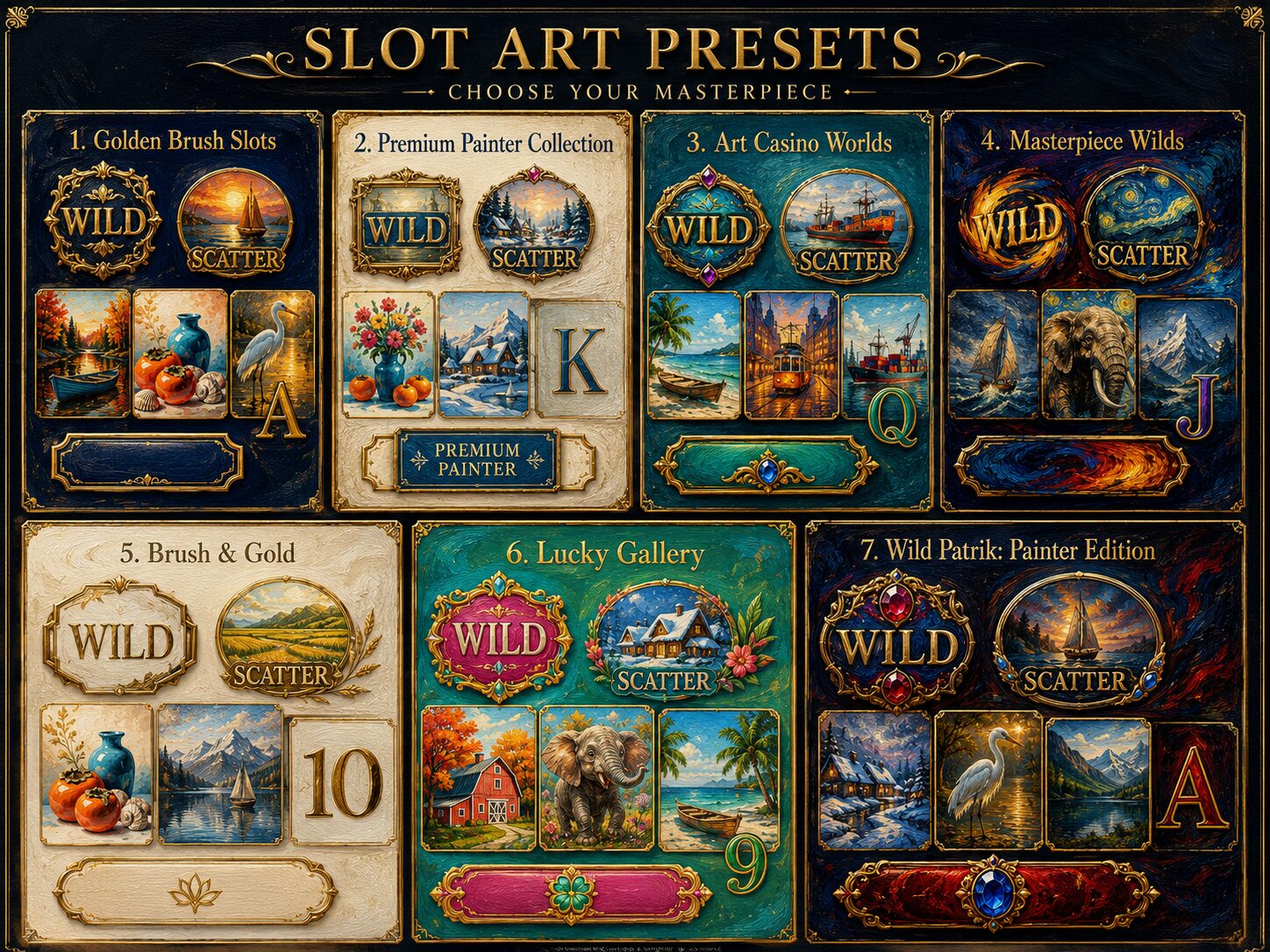
Symbols, background, lobby tile, promo art and logo treatment. The parametric pipeline produces a full visual package in days, and every theme is reviewed by a human before it is wired to the engine.
English, Russian, Spanish, Portuguese, German, French, Italian, Dutch, Polish, Turkish, Japanese, Chinese — each with its own URL and hreflang, rendered in HTML before JavaScript runs.
Round logs, RTP and volatility reports, near-miss and big-win markers, engagement heatmaps and A/B of mechanics.
Five steps, each with a deliverable you can check. Nothing starts on a handshake and nothing is invoiced without a written scope.
Your market, licence, platform, hosting, languages and the target RTP. We tell you on the call whether we are the right supplier.
What is included, what is not, the tier, the dates and the responsible person on each side.
Art brief, symbol set, background, lobby tile and promo. You review at two checkpoints before anything is wired.
API keys, wallet calls, round flow, theme config, back office accounts, test rounds and a fairness re-check on staging.
Go-live checklist, release notes, operator training, documentation and a named support channel.
Timelines are planning estimates for a standard integration; the contract fixes dates after the scope is signed. Custom mechanics or a new math model add a separate calibration stage.
Open prices, same as on the pitch page. You should be able to budget before the first call — the ranges are market anchors, not a public offer.
Art only, for a team that already has a theme and an engine.
Not included: Math, engine, back office, integration.
A complete visual theme, ready to run on the engine.
Not included: Engine licence, hosting, integration.
One published game white-labelled to your brand, on your domain.
Not included: Engine source, custom mechanics, multi-brand resale.
Your own titles on our engine, on your server, with the API and the back office.
Not included: Licence, KYC/AML, payments, lab certification, traffic.
You want the platform, the content flow and the operations run with you.
Not included: Licence in your name, payments, your marketing spend.
No client logos we cannot show and no revenue numbers we cannot source. These are the claims you can check yourself, with the method attached.
Calibration run of the showcase theme. The fail-gate blocks a release when the simulated RTP drifts outside the agreed band.
Commit-reveal with HMAC-SHA256 and no modulo bias. After the round the seed is revealed and the outcome is recomputed via /api/fair/verify.
Lines and ways, Megaways, cascades up to ×5, clusters, buy-bonus — plus a three-tier progressive jackpot.
Parametric art pipeline: a full visual package generated and reviewed, then wired to the engine — days per theme, not months.
Each locale has its own URL and hreflang cluster; text is in the HTML, not rendered by the browser.
Live demo, public design gallery and this page. No form wall before the proof.
Every demo follows the same agenda, so a buyer can compare suppliers on the same script. The demo runs on virtual credits and shows the 18+ notice on screen.
We repeat your answers: market, licence, platform, RTP band. You correct us before we show anything.
The theme in your colours, your lobby tile, your promo — not a generic screenshot.
Cascades, Megaways, buy-bonus or the jackpot, whichever the brief needs.
You spin, copy the seed and recompute the outcome through the public verify endpoint. We do not do it for you.
Rounds, RTP report, theme management, then the wallet and round endpoints on one screen.
One recommended tier, what is in it, what is not, and the next date.
Technical call, written scope or a pilot theme — with a date, not “we will think about it”.
This is the working part of the playbook: how we qualify, what we say to each buyer type, how we answer the twelve objections that actually come up, and how we follow up without pressure. It is public on purpose — a buyer who reads it knows exactly what to expect from us.
You run the casino and the licence.
You distribute to operators.
You bring the art and the audience.
You are funding a games business.
You have traffic; you want your own product.
“Compared with what: renting someone else’s content, or building your own engine? The prices are open. You can start with a theme at $800–3,000 or a skin licence at $3,000–8,000 and test the quality before a large commitment.”
“Renting gives you the same game as everyone else. Owning gives you the brand, the domain and the data. If the brand is not the point, an aggregator is honestly a better buy — and we will say so.”
“Real money only moves through a licensed operator in its jurisdiction. We supply technology; we do not route around licensing. We will check your regulator’s certification requirements on the call and tell you what we have and what we do not.”
“Commit-reveal on HMAC-SHA256 with no modulo bias. The seed is revealed after the round and the outcome is recomputed. Let us do it together in the demo — you spin, you verify.”
“A theme takes days. Integration depends on your platform; we name the date after the scope, not before.”
“Engine updates and fixes are part of the monthly licence. Channels and response times are written into the contract — we do not quote an SLA we have not signed.”
“Your domain, your server, an API integration, and the round data in your database when you host. What you need to receive on exit is written into the agreement.”
“We are not asking you to replace them. Start with one branded theme next to X and compare it on your own numbers.”
“Then skip the engine: a design pack at $150–600, a full theme at $800–3,000, or a content subscription at $2,000–6,000 a month.”
“Yes, by changing the scope: fewer themes, skin instead of engine, your hosting. Not by discounting the same scope. Prepayment or a longer term is a different conversation.”
“We do not publish client names without permission and we do not invent them. What you can check today: the live demo, the verify endpoint, the published themes and a technical call with the developer.”
“With an engine licence the game runs on your server. Continuity terms — access, handover, escrow — are negotiable and are written into the contract, not promised in a chat.”
“We calibrate RTP and prove it by simulation. We guarantee neither a player’s result nor your revenue — anyone who does is selling you something else.”
“No. That is the line we do not cross.”
| D | Channel | Action |
|---|---|---|
| D0, within 2 business hours | Reply to the request and offer two call slots. | |
| D1 | Messenger they chose | One short reminder with the demo link. |
| D0 after the demo | Recap: what was shown, the recommended tier, open questions, next date. | |
| D3 | Messenger | Answer the question left open, with a demo link or a screenshot. |
| D7 | Give value: a new theme or their palette applied to a skin. | |
| D14 | The closing note: “open, postponed, or not a fit?” | |
| After | Consent only | A monthly theme digest. A refusal closes the sequence. |
One touch per 48 hours, maximum. A “no” ends the sequence; it does not move it to another channel.
Hi {name}, thanks for the request.
In one line: Luxoreel licenses the slot engine, the math and the design studio. The game runs on your domain and your server, under your brand; real-money play is accepted only by a licensed operator.
So we do not waste your time — two questions: (1) which licence or jurisdiction, (2) does the game plug into your platform through an API, or do you need the platform too?
The demo opens right now: {demo link}. A 15-minute call: {calendar link}.
Hi {name}, {manager} from Luxoreel — I replied to your request by email.
If this channel is easier: which jurisdiction are you in, and what launch date are you working to?
Demo, no sign-up: {demo link}.
Hi {name}, thanks for your time.
What you saw: the theme in your brand, a round verified through the public endpoint, the back office with rounds and the RTP report.
Recommended tier: {tier} at {price range}. Included: {…}. Not included: licence, payments, KYC/AML, traffic.
Open questions: {…} — answers by {date}.
Next step: {technical call / written scope / pilot theme} on {date}. Does that work?
Every number below comes from CRM fields, not from memory. If a metric cannot be computed, fix the CRM before changing the script.
| Metric | How to compute |
|---|---|
| Qualified-lead rate | Leads with a licence or a licensed partner and a fitting tier, divided by all leads. Split by source. |
| Time to first reply | Median hours from the request to the first outbound message. |
| Request → demo | Share of requests that reach a booked demo. |
| Demo attendance | Demos held divided by booked demos whose date has passed — no-shows and travel are recorded separately. |
| Demo → proposal | Share of demos followed by a written scope within 48 hours. |
| Proposal → signed | Win rate by tier, with the loss reason recorded. |
| Cycle length | Median days from request to signature, per tier. |
| Discount share | Deals with a discount, and the average discount — rising without a scope change is a warning. |
| Self-verified demos | Share of demos where the buyer ran the verify endpoint themselves. |
| Loss reasons | Top five, by field — the input for the next edit of this page and the FAQ. |
| Assistant-sourced leads | “How did you find us” plus the referrer — the practical AEO check. |
What it is, who it is for, the licence boundary and 18+ are in the first lines — not after a brand story.
Short claims with a number and a method (“95.2% on 1,000,000 spins”), one-paragraph FAQ answers, and a block that says when the product does not fit. Assistants cite that; they skip adjectives.
Service and offers with price ranges, FAQPage, HowTo for the process, BreadcrumbList and Organization — so the page is machine-readable, not only readable.
The verify endpoint is the demo. A buyer who recomputes a round has already done the technical due diligence.
Ranges plus a “never included” list remove the two reasons B2B deals stall: unknown budget and a surprise invoice.
No countdowns, no fake scarcity, a capped cadence and a “no” that ends the sequence. Qualification protects the buyer’s time as much as ours.
Read this before you buy. It is cheaper than discovering it during integration.
Each claim on this page has a method attached, and the method is something you can run yourself. These are the primary surfaces to check before a call.
Claims here are dated. If a number is wrong or out of date, send the link and what you checked through the form — we correct the page and change the date. Nothing is edited silently.
Send the two facts we need — your licence or jurisdiction, and whether the game plugs into your platform or needs one. You will get a written answer with a tier and a date, or an honest “this is not us”.
Demo and showcase run on virtual credits: no real money is accepted or paid out. Real-money play is operated only by licensed operators in their own jurisdictions. 18+. Prices are market anchors, not a public offer.